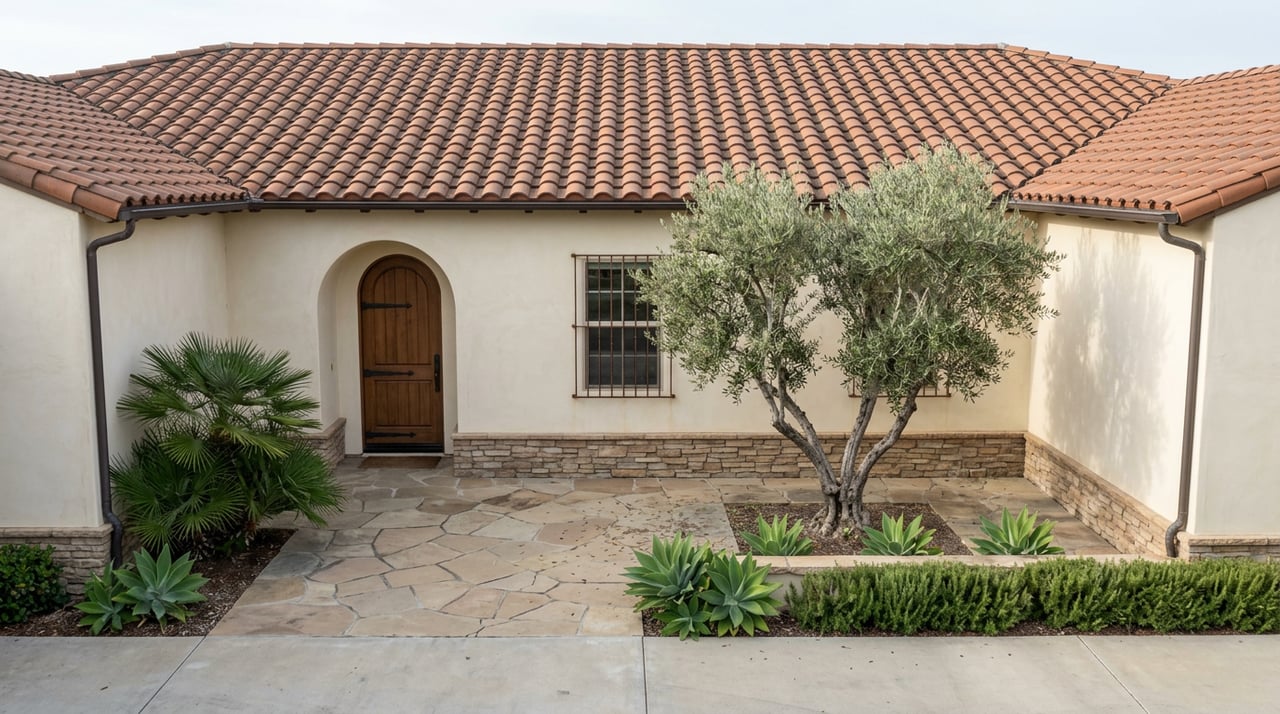
Why Two Homes on the Same Eastvale Street Can Carry Different Tax Bills
September 17, 2026
September 17, 2026
A buyer goes under contract on a resale in Eastvale. The price fits the budget, the pre-approval letter is solid, and the only thing left is paperwork. Then the loan officer pulls the actual secured tax bill and finds a Community Facilities District line item that wasn't part of the original monthly estimate. The debt-to-income math shifts. The loan amount the buyer qualifies for shrinks. None of this shows up in the listing price, and by the time it surfaces, the buyer has already picked out paint colors.
This is not a rare glitch in one file. It is how Mello-Roos works in a city built almost entirely during the era when California started using Community Facilities Districts, or CFDs, to fund the roads, schools, and parks that come with new subdivisions. According to the California State Board of Equalization, the base property tax rate under Proposition 13 is the same 1 percent everywhere in the state. What sits on top of that base is not uniform at all, and in Eastvale it varies by which side of town, and which specific CFD, a given parcel happens to fall inside.
Eastvale's citywide median effective property tax rate currently runs around 0.86 percent, according to property tax trend data compiled by Ownwell. That figure sits below both the California state median of 1.21 percent and the national median of 1.02 percent, which sounds like good news on its face.
The citywide number is an average, and averages flatten differences that matter to an individual buyer. Some Eastvale subdivisions carry CFD bonds that are decades from being paid off. Others sit in older phases where the bonds have already retired or were never as large to begin with. Blend those together and you get a tidy 0.86 percent headline that tells you almost nothing about what a specific address will actually cost to hold.
Split Eastvale by ZIP code and the range opens up. Homeowners in 92880 carry a median effective rate of 0.87 percent, while those in 91752 pay 0.82 percent, per the same Ownwell data. A 0.05 percentage point spread sounds small until it is translated into dollars: median annual tax bills across the city's ZIP codes range from roughly $7,104 up to $9,052.
That gap traces back to school district boundaries and which local assessment or Community Facilities District covers a given parcel, not to anything about the home itself. A buyer comparing two similarly priced houses on opposite sides of Eastvale is not just comparing square footage and lot size. They are comparing two different tax rate areas that happen to share a city name.
| ZIP Code | Median Effective Rate | Approximate Annual Bill |
|---|---|---|
| 91752 | 0.82% | $7,104 |
| 92880 | 0.87% | $9,052 |
Source: Ownwell property tax trend data for Eastvale, Riverside County
Mello-Roos fees show up on the property tax bill labeled as a Community Facilities District, followed by a fund number and a district name, according to the Riverside County Assessor-County Clerk-Recorder's office. In Eastvale, that district is not always the city itself. Depending on where the property sits, the special financing district may be operated and maintained by the Jurupa Community Services District, known locally as JCSD, rather than by the City of Eastvale directly, according to the city's own finance department page on special financing districts.
That distinction matters at the moment a buyer has a question about the assessment. Calling city hall about a JCSD-administered CFD wastes time during an already tight escrow window. The name and number printed on the tax bill is the one to contact directly.
According to JVM Lending, Mello-Roos is not optional once a lender sees it. A lender calculates a buyer's housing expense and debt-to-income ratio using every recurring housing cost: principal, interest, base property tax, homeowners insurance, HOA dues, and any CFD special tax on the parcel. A $3,600 annual Mello-Roos assessment adds $300 a month to that calculation, the same as if it were baked into the mortgage payment itself, and Riverside County's newer master-planned communities frequently carry combined effective tax rates above 1.5 percent once CFDs are layered on top of the base rate, compared with a more typical 1.1 to 1.4 percent range elsewhere in the county.
Put in income terms, a $500 monthly Mello-Roos obligation can require something in the neighborhood of $17,000 more in annual income to qualify for the identical purchase price on a home without one. That is not a rounding error for a buyer working within a specific pre-approval ceiling. It is the difference between a loan that clears underwriting and one that gets sent back for a lower offer or a bigger down payment.
Buyers looking at new-home communities in the Inland Empire, where builders such as Toll Brothers, Lennar, and Tri Pointe Homes are active, encounter Mello-Roos disclosure in a different form than resale buyers do. The special tax typically splits into two categories: a Facilities portion that retires the original construction bonds, usually within 20 to 40 years, and a Services portion that funds ongoing park and open space maintenance and often stays on the bill permanently.
Many of these communities also build in an annual escalator, commonly around 2 percent, so a Mello-Roos payment that looks manageable in year one can climb steadily over a decade. A separate wrinkle unique to new construction is the supplemental tax bill, which arrives after close because the county initially assessed the land at its undeveloped value before the home was finished, then adjusts once the completed sale price is on record.
Resale buyers see a different paper trail. California law requires sellers to disclose Mello-Roos in writing before a sale finalizes, typically through a Notice of Special Tax.
Riverside County also sets an annual window for challenging an assessed value that seems too high, with a filing deadline of November 30 each year. That deadline applies to the base assessment, not to Mello-Roos itself, since the special tax is set by formula rather than by the home's market value.
Does Mello-Roos ever go away? Most CFD bonds are structured to retire in 20 to 40 years from formation. Ask how many years remain on a specific property's district before assuming the payment is permanent, since a Facilities portion nearing its final years carries different long-term math than one that just started.
Is it deductible? Generally not. Mello-Roos is not based on the home's assessed value, so it falls outside the standard property tax deduction. A narrow exception exists for the portion of a CFD that funds ongoing maintenance or bond interest rather than new construction, and confirming that split requires a conversation with a tax professional, not a guess.
Does a lower Mello-Roos always mean a better deal? Not automatically. The tax funds specific infrastructure, and in some subdivisions that infrastructure is part of what shaped the neighborhood's amenities in the first place. The point is not to avoid Mello-Roos altogether. It is to know the actual number on a specific address before comparing it against a home that does not carry one.
Two houses in Eastvale can list at the same price and still carry meaningfully different carrying costs once the CFD line item is added in. The only way to know which one applies to a specific address is to pull the bill by parcel number before the offer goes in, not after the loan is already in underwriting.
If you are comparing homes across Eastvale's different tax rate areas and want the actual numbers pulled before you write an offer, Lily Valdivia can walk through the parcel-specific details with you. Let's Connect.
This article is general information, not legal, tax or financial advice. Consult a qualified professional about your situation.
Stay up to date on the latest real estate trends.
Work with a REALTOR® who values your story, understands your goals, and is committed to helping you feel truly at home.